
Travel alerts & warnings
Kenya driving guide.
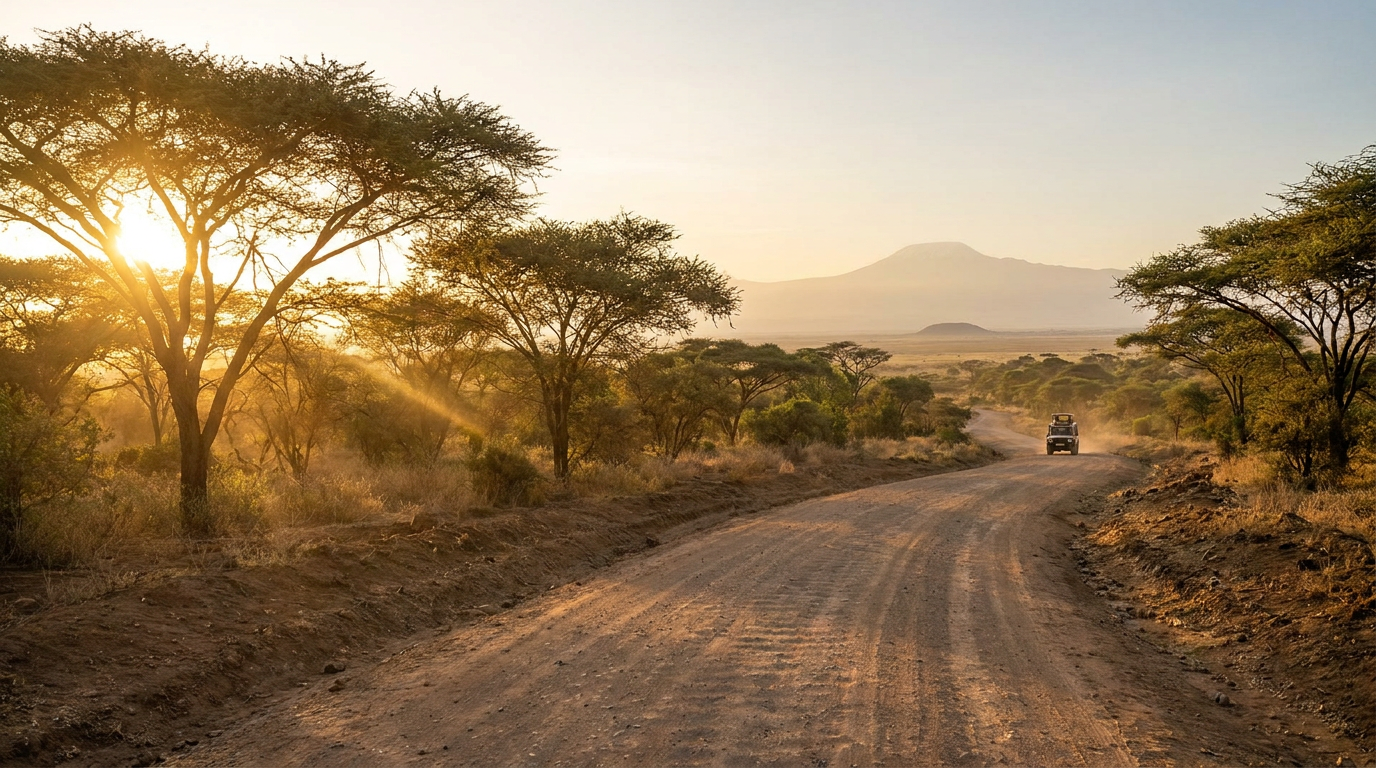
Driving in Kenya gives you access to wildlife parks, Rift Valley lakes and the coast, but expect heavy urban traffic, potholes, speed humps and unpredictable overtaking. Plan rural journeys in daylight and use a high-clearance vehicle, preferably a 4WD, for rough park roads and remote routes.
- Advisory
- Reconsider travel
- Drives on
- Left
- Best season
- June to October
- Permit honored
- Yes
USIDA member value-add
Build a driving trip in Kenya
Tell us how long you have and what you like. We'll lay out a realistic day-by-day drive with stops, drive times and local road notes.
Takes a few seconds — free for members.
Level 3: Reconsider Travel
Reconsider travelto Kenya due to risk of health, crime, kidnapping, terrorism, unrest, and traffic safety. Some areas have increased risk. Read the entire Travel Advisory.
- The U.S. Centers for Disease Control and Prevention (CDC) has issued a Travel Health Notice for Ebola Bundibugyo Virus Disease for Kenya.
- The U.S. Centers for Disease Control and Prevention (CDC) has issued a Travel Health Notice for Ebola for the Democratic Republic of the Congo (DRC).
- On May 17, the World Health Organization (WHO) declared the Ebola outbreak in the DRC and Uganda a Public Health Emergency of International Concern
- Please see our section on Travel from Ebola-Impacted or Elevated Risk Countries section. Medical services in Kenya are limited. They are often unavailable in rural areas. Medical facilities in Kenya often lack sufficient medicine and equipment. Except for a few private medical facilities based in the large urban centers with enhanced capability, many health issues may require medical evacuation at your own expense. Medical facilities will usually deny service if payment is not made upfront.
- Some schools, substance abuse centers, and other facilities claim to rehabilitate people, but operate with little or no government supervision. Physical and emotional abuse is common in these places. Residents, including Americans, have been held in these facilities against their will.
- Americans or residents who lure individuals to Kenya under false pretenses or forcibly place Americans into such rehabilitation facilities may be subject to legal repercussions in the United States.
Driving there
Your permit in Kenya
- Kenya honors the International Driving Permit. The permit is a translation of your license into ten languages — it is not a license on its own.
- Carry your valid U.S. driver's license with the permit at all times. The permit is valid for one year and only while your U.S. license is valid.
- Not party to the 1949 convention; the International Driving Permit is honored.
- Rental companies and local police can be stricter than national law. Confirm the requirement with your rental company before you travel.
Advisory information is published by the U.S. Department of State and reproduced here for convenience. It can change at any time — always check the official advisory before you travel. USIDA does not issue travel advisories.
Before you drive
Top travel tips for Kenya
Road rules and speed limits
Wear seat belts and do not use a handheld phone while driving. For ordinary passenger cars, limits are generally 50 km/h in built-up areas and 100 km/h on open roads; follow posted restrictions and slow down for unmarked humps, livestock and pedestrians.
Nairobi Expressway tolls
The Nairobi Expressway is tolled, with charges depending on your vehicle class and entry and exit points. Use the appropriate manual-payment or electronic-toll lane, and ask your rental company whether its vehicle has an active toll account and how charges are settled.
Fuel before remote journeys
Petrol and diesel are widely available in cities and larger towns, but stations become sparse near parks and remote areas. Fill up before leaving major towns, check the required fuel type and carry Kenyan shillings in case card payments or mobile networks fail.
Rental vehicle checks
Confirm that your rental agreement permits national-park access and unpaved roads; some policies exclude off-road damage. Check tyres, the spare wheel, jack and insurance documents, and confirm roadside-assistance coverage before departure.
Documents and police checkpoints
Carry your original driving licence alongside your International Driving Permit, plus your passport, rental agreement and proof of vehicle insurance. Stop when directed at police checkpoints; if cited for an offence, request the official notice and payment procedure rather than making an unofficial roadside payment.
Worth the drive
Places to see in Kenya
Nairobi National Park
Nairobi · About 30–60 minutes from central Nairobi to the main gate, depending on traffic.
See rhinos, giraffes and lions against the city skyline; park tracks make a high-clearance vehicle useful.
Lake Naivasha
Nakuru County, Rift Valley · About 2–3 hours from Nairobi to the southern lakeshore.
Enjoy lakeside birdwatching and boat trips, with Hell’s Gate National Park nearby for cycling and dramatic scenery.
Lake Nakuru National Park
Nakuru County · About 20–40 minutes from central Nakuru to the main gate.
A rewarding wildlife drive for rhinos, woodland birds and lake viewpoints; flamingo numbers vary with conditions.
Amboseli National Park
Kajiado County · About 4–5 hours from Nairobi to Kimana Gate via Emali.
Known for elephant herds and views of Mount Kilimanjaro when skies are clear; a 4WD is advisable for park tracks.
Tsavo East National Park
Taita-Taveta County · About 3–4 hours from Mombasa to Voi Gate, allowing for highway traffic.
Explore expansive savannah, red-dust elephant country and wildlife-viewing routes around waterholes.
Diani Beach
Kwale County, South Coast · About 1.5–2.5 hours from central Mombasa via the Dongo Kundu bypass, depending on traffic.
A scenic coastal base for white-sand beaches, reef excursions and nearby sacred Kaya forests with guided access.
Heading to Kenya?
Apply online in about ten minutes. We print and mail your permit, and you can track it the whole way.