
Travel alerts & warnings
Indonesia driving guide.
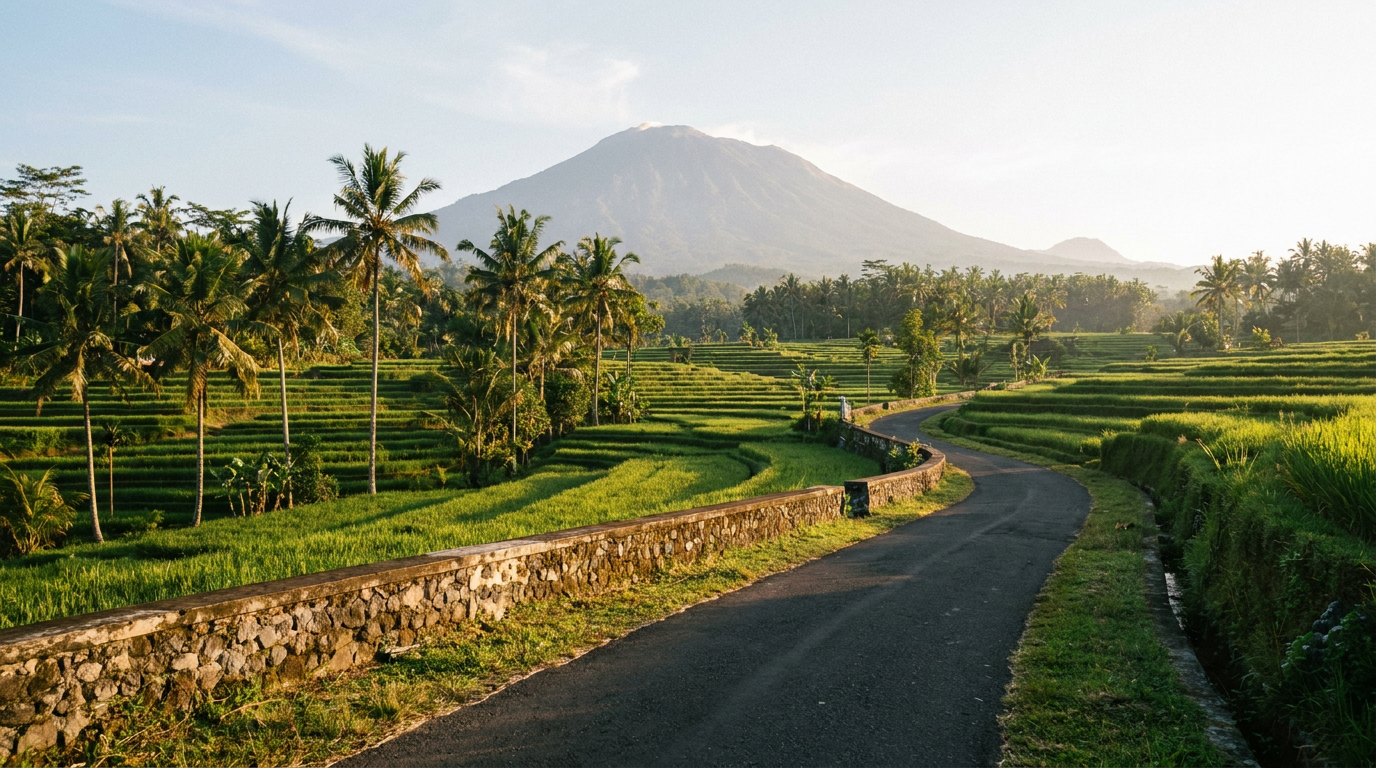
Driving in Indonesia means sharing busy roads with motorcycles, navigating narrow streets, and allowing extra time for unpredictable traffic. Self-drive trips suit parts of Java and Bali, but mountain roads, heavy rain, and inter-island ferry crossings require careful planning.
- Advisory
- Increased caution
- Drives on
- Left
- Best season
- May to September…
- Permit honored
- Yes
USIDA member value-add
Build a driving trip in Indonesia
Tell us how long you have and what you like. We'll lay out a realistic day-by-day drive with stops, drive times and local road notes.
Takes a few seconds — free for members.
Level 2: Exercise Increased Caution
Exercise increased cautionin Indonesia due to risk of natural disasters, unrest, and terrorism. Some areas have increased risk. Read the entire Travel Advisory.
- Unrest
- Demonstrations occur frequently in Indonesia, and they are a normal part of the political landscape, but the type, size, and impact vary significantly, and some demonstrations can turn violent. Avoid demonstrations and crowds.
- Natural disasters
- Indonesia regularly experiences natural disasters such as earthquakes, tsunamis, and volcanic eruptions. These may result in disruptions to transportation, infrastructure, sanitation, and health services. Review our information on Weather and Natural Disasters in Indonesia.
- Terrorism
- There is a risk of terrorist violence, including terrorist attacks and other activity in Indonesia. Visit the U.S. Department of State's country reports on terrorism to learn more.
Driving there
Your permit in Indonesia
- Indonesia honors the International Driving Permit. The permit is a translation of your license into ten languages — it is not a license on its own.
- Carry your valid U.S. driver's license with the permit at all times. The permit is valid for one year and only while your U.S. license is valid.
- Not party to the 1949 convention; the International Driving Permit is honored.
- Rental companies and local police can be stricter than national law. Confirm the requirement with your rental company before you travel.
Advisory information is published by the U.S. Department of State and reproduced here for convenience. It can change at any time — always check the official advisory before you travel. USIDA does not issue travel advisories.
Before you drive
Top travel tips for Indonesia
Road rules and everyday hazards
Wear seat belts, avoid handheld phone use, and obey traffic lights even when other drivers do not. Motorcycle riders and passengers must wear helmets. Watch for sudden U-turns, unlit vehicles, pedestrians, and motorcycles entering from side streets.
Cashless toll roads
Most toll roads require a compatible prepaid electronic-money card, such as Mandiri e-money, BCA Flazz, or BRI BRIZZI. Ask your rental company which card works along your route, check its balance before entering, and keep the same card for entry and exit.
Fuel and remote routes
Pertamina stations are widespread on major routes. Confirm the correct fuel with your rental company: Pertamax is gasoline, while products such as Dex are diesel. Carry rupiah because card acceptance varies, and fill up before remote mountain drives rather than relying on roadside bottled fuel.
Speed limits
General maximum limits are 50 km/h in urban areas, 30 km/h in residential areas, 80 km/h on intercity roads, and 100 km/h on expressways. Expressways generally have a 60 km/h minimum in free-flowing conditions. Posted limits take precedence; rain, potholes, and mixed traffic often demand much lower speeds.
Rental documents and police checks
Confirm that your home licence and IDP are accepted for your vehicle class and that your insurance covers self-driving in Indonesia. Carry both original licences, passport identification, and the rental agreement; ensure the vehicle has its STNK registration document. At police checks, stay calm, show the requested documents, and request an official ticket and payment instructions for any alleged offence.
Worth the drive
Places to see in Indonesia
Borobudur
Central Java · About 1.5–2 hours from central Yogyakarta, one way.
Explore a monumental Buddhist temple surrounded by volcanic landscapes; reserve temple-structure access ahead if you want to climb it.
Ubud and Tegallalang
Bali · About 1.5–2.5 hours from central Denpasar to Tegallalang via Ubud, excluding stops.
Combine Ubud's temples and arts scene with nearby rice terraces; park outside congested central streets where possible.
Tanah Lot
Bali · About 1–2 hours from central Denpasar, one way; sunset traffic can add time.
A dramatic sea-temple setting with coastal viewpoints, especially around sunset; access near the temple depends on tides.
Mount Bromo
East Java · About 4–5 hours from Surabaya to Cemoro Lawang, one way; allow additional time for the park excursion.
See volcanic craters and sunrise viewpoints. Drive to Cemoro Lawang, then arrange locally authorized transport for park areas restricted to ordinary rental cars.
Tangkuban Perahu
West Java · About 1.5–2.5 hours from central Bandung, one way; weekends can be substantially slower.
Visit accessible volcanic-crater viewpoints in the cooler highlands north of Bandung; check for closures linked to volcanic activity.
Lake Toba
North Sumatra · About 4–6 hours from Medan to Parapat, one way, depending on route and traffic.
Enjoy vast volcanic-lake views and Batak cultural sites; reaching Samosir Island may require additional driving or a ferry.
Heading to Indonesia?
Apply online in about ten minutes. We print and mail your permit, and you can track it the whole way.