
Travel alerts & warnings
Guinea-Bissau driving guide.
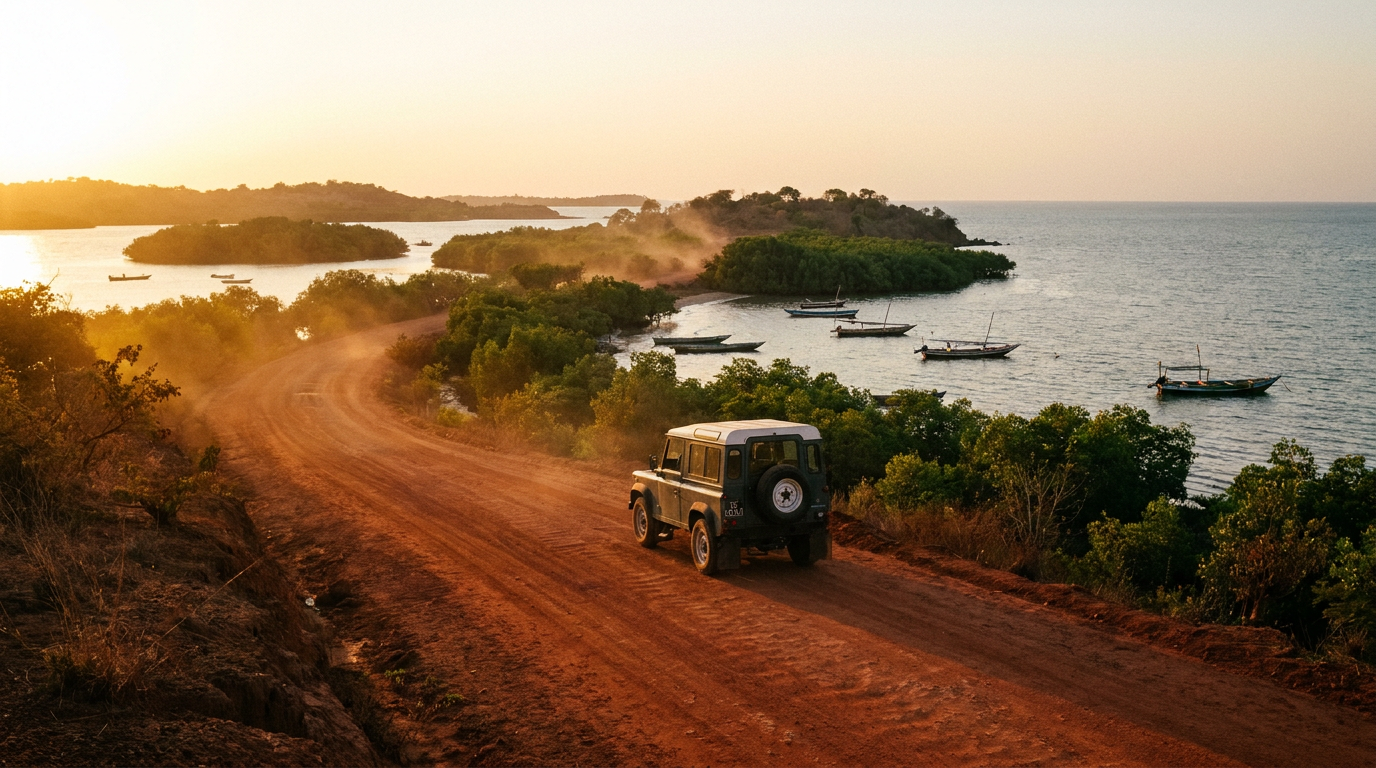
Driving in Guinea-Bissau requires patience: roads outside the main corridors can be badly potholed or unpaved, and heavy rain can make some routes impassable. Travel in daylight, expect pedestrians and livestock on the road, and consider a locally hired driver for unfamiliar rural routes.
- Advisory
- Reconsider travel
- Drives on
- Right
- Best season
- November to April…
- Permit honored
- Yes
USIDA member value-add
Build a driving trip in Guinea-Bissau
Tell us how long you have and what you like. We'll lay out a realistic day-by-day drive with stops, drive times and local road notes.
Takes a few seconds — free for members.
Level 3: Reconsider Travel
Reconsider travelto Guinea-Bissau due to unrest, inadequate health infrastructure, and landmines.
- There is no U.S. embassy or consulate in Guinea-Bissau. The U.S. government has limited ability to provide emergency services to U.S. citizens. Consular services are provided by the U.S. embassy in Dakar, Senegal.
- Unrest
- Guinea-Bissau has had periods of political instability for decades, including political unrest in November 2025. Large-scale demonstrations related to the local political situation may occur with little notice. Demonstrations may disrupt transportation and other essential services.
- Health
- Guinea-Bissau’s health infrastructure is inadequate. Health services, hygiene, and quality control do not meet U.S. standards of care. Pharmacies are not well regulated. Locally available medications are limited and may be unsafe. Even a minor health issue may require medical evacuation at your own expense.
- Landmines
Driving there
Your permit in Guinea-Bissau
- Guinea-Bissau honors the International Driving Permit. The permit is a translation of your license into ten languages — it is not a license on its own.
- Carry your valid U.S. driver's license with the permit at all times. The permit is valid for one year and only while your U.S. license is valid.
- Not party to the 1949 convention; the International Driving Permit is honored.
- Rental companies and local police can be stricter than national law. Confirm the requirement with your rental company before you travel.
Advisory information is published by the U.S. Department of State and reproduced here for convenience. It can change at any time — always check the official advisory before you travel. USIDA does not issue travel advisories.
Before you drive
Top travel tips for Guinea-Bissau
Road rules and everyday hazards
Wear seat belts, avoid alcohol before driving, and slow down through villages and markets. Road markings, lighting and traffic signals are limited; avoid night driving because of unlit vehicles, animals and difficult-to-see potholes.
Speed limits
Follow posted limits and police instructions; speed-limit signs can be sparse outside Bissau. Do not assume an unmarked road permits highway speeds: allow extra stopping distance and reduce speed sharply near settlements, damaged surfaces and narrow bridges.
Tolls and crossing charges
Guinea-Bissau has no extensive toll-motorway network. Carry small amounts of West African CFA francs for any legitimate parking or crossing charges, and request a receipt rather than treating every roadside payment demand as an official toll.
Fuel and breakdown planning
Fill up in Bissau or larger towns such as Bafatá and Gabú; rural fuel supplies can be unreliable, and card payments should not be assumed. Carry drinking water, a usable spare tyre and basic recovery equipment, especially during the June–October rainy season.
Rentals and police checks
Rental options are limited, and vehicles with drivers are often easier to arrange than self-drive cars. Confirm that the operator accepts your licence and International Driving Permit, check insurance and breakdown arrangements, and carry both documents alongside identification and vehicle papers. Stop calmly at checkpoints and ask for an official receipt for any fine.
Worth the drive
Places to see in Guinea-Bissau
Bissau Velho
Bissau Autonomous Sector · About 5–15 minutes from central Bissau, depending on your starting point.
Explore the capital's old colonial quarter and waterfront streets; park securely and continue on foot where practical.
Quinhamel
Biombo · About 45–75 minutes from Bissau.
A manageable countryside outing with opportunities to discover Papel cultural traditions and the surrounding estuarine landscape; arrange community visits locally.
Praia de Suru
Biombo, near Prabis · About 45–75 minutes from Bissau; final access roads can deteriorate after rain.
A quiet coastal escape near the capital, best for a shoreline walk and a relaxed meal rather than assuming safe swimming conditions.
Cacheu Fort and historic waterfront
Cacheu · About 2.5–3.5 hours from Bissau, allowing for road conditions and checkpoints.
The small Portuguese-era fort and riverside setting offer insight into the area's colonial and slave-trade history.
Bafatá historic centre
Bafatá · About 2.5–3.5 hours from Bissau.
See the old riverfront streets and colonial architecture in the birthplace of independence leader Amílcar Cabral.
Gabú
Gabú · About 1–1.5 hours from Bafatá.
An eastern regional hub with lively markets and strong Fula and Mandinka cultural influences, offering a different perspective from coastal Guinea-Bissau.
Heading to Guinea-Bissau?
Apply online in about ten minutes. We print and mail your permit, and you can track it the whole way.